
REVIEW · THE USA
Kailua Kona: Manta Ray Night Snorkel Tour with Guide
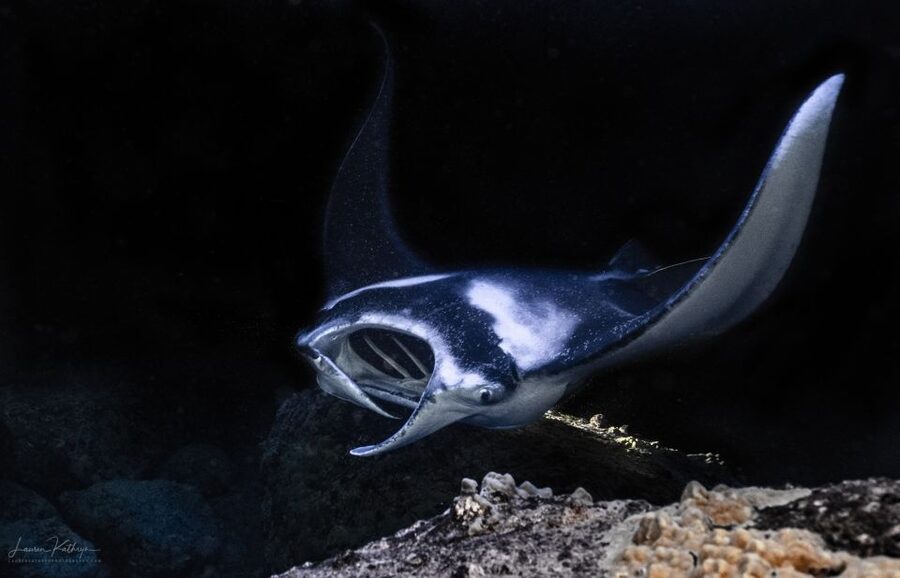
Manta rays glide beneath you in the dark, their broad wings lit from below as they circle through clouds of plankton. Some grow to a wingspan of 16 feet, and several may pass within inches of your mask. This is not a quick wildlife cruise. You spend at least 35 minutes in the water watching wild animals feed.
I like the small family-run operation, which can feel calmer than a packed boat, and I like the crew’s careful approach to safety. Guides such as John, Elijah, Johnnie, and Eli have been praised for keeping swimmers comfortable and explaining how to share the water with the rays. The main drawback is simple: you need to swim confidently, climb a boat ladder without help, and manage the open ocean at night.
Key points to know before booking
- At least 35 minutes with the manta rays: The boat ride takes about 15 to 25 minutes each way, leaving the main part of the tour in the water.
- Small family operation: The boat may carry roughly 10 to 20 people, and some departures have had as few as six swimmers.
- Wild animals, not a guaranteed show: Mantas often gather in large numbers, but they can appear in different numbers and may not behave on schedule.
- A guide stays in the water: The crew provides CPR and lifeguard-certified support, with an in-water guide to help you stay calm and follow the rules.
- Gear and shorty wetsuits are included: Bring swimwear, and bring your own underwater camera if you want photos or video.
- You must be an able swimmer: This trip is not suitable for non-swimmers, people with recent surgery, or those with back or heart problems.
Why Kona’s night manta snorkel is so special
Kailua-Kona’s manta encounter works because underwater lights attract plankton, and the rays come to feed. You float at the surface while the mantas sweep below and around you, turning through the light with surprising grace for animals so large.
The night setting changes everything. In daylight, a manta ray is impressive. At night, you see only the illuminated body, the black ocean beyond it, and the pale shapes of rays appearing without warning. One may pass directly beneath you, then turn upward with its mouth open as it filters food from the water.
You are not visiting an aquarium. The mantas are wild, and you cannot touch them. That rule matters. Some rays may come close enough to brush against you, but you should let them choose the distance. The best encounter is one where the animals remain relaxed and the people behave quietly and predictably.
The number of rays can vary widely. Groups have seen four, five, six, seven, nine, or even far more at one time. One account described 20 or 30 mantas circling beneath the group, while another saw only a few. That range is worth keeping in mind when you book. The experience depends on wildlife, not a fixed performance.
More Sunset Snorkeling Cruises in the USA
- Big Island Manta Ray Night Snorkel
★ 5.0 · 5,656 reviews - KONA Manta Ray Night Snorkel – FREE re-ride if no Sightings
★ 5.0 · 2,212 reviews - Manta Ray Night Snorkel at Kona, Big Island
★ 5.0 · 1,758 reviews
Leaving Honokohau Harbor after sunset
The meeting point is on the north side of Honokohau Small Boat Harbor at 74 Kealakehe Parkway. Search Google Maps for Snorkel Big Island if the street address does not guide you clearly to the right side of the harbor.
From Highway 19, turn west toward the ocean at the Honokohau Marina and Small Boat Harbor sign. Take the first right into the north side of the harbor, follow the road around the bend, and continue past Gentry’s gas station. The road leads toward the Kona Sailing Club, where you park nearby without entering the club area.
Look for the Snorkel Big Island black Ram 2500 truck. The captain meets you there, although he may still be out with the previous group. The boat uses the ramp between the pavilion and the sailing club.
This is a working harbor rather than a polished resort arrival area. Give yourself enough time to find the correct side and park. The operator asks you to arrive on time, and that matters on a short evening tour with a fixed departure.
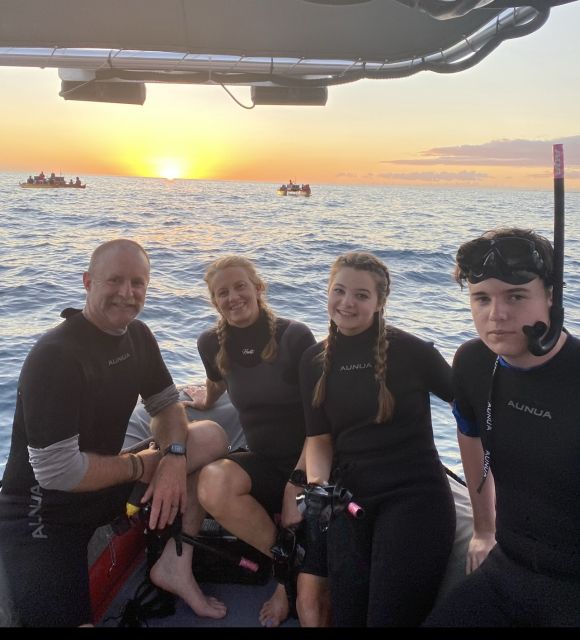
Once aboard, expect a boat ride of about 15 to 25 minutes to the manta site. The exact timing can vary, but the ride is short enough that you spend most of the two-hour outing focused on the encounter rather than on transportation.
The ride itself can be part of the evening. You might see the sunset on the way out, and the return trip can bring clear views of the stars. It can also be dark and rough, especially on the way out, so anyone prone to motion sickness should think carefully about the conditions.
A small boat with a family feel
Snorkel Big Island is family owned and operated. The tone is informal, but the crew takes safety seriously. Names connected with different departures include Captain John, John Junior, Julia, Jay, Bradley, Elijah, Johnnie, Eli, Kelly, Sawyer, and Hunter.
You may not meet every one of them. The staff changes by departure, but the pattern is consistent: a captain handles the boat, a guide joins you in the water, and the crew explains how to stay safe around the mantas.
The smaller boat is one of the strongest reasons to choose this trip. A group of 10 to 20 people feels more manageable than a large crowd, and some outings have had only six participants. A small group gives you more room around the floating light board and makes it easier to hear the guide.
It does not mean you will have the ocean to yourself. Other boats may be at the feeding area, and the exact group size can change. Still, the family-scale setup suits people who prefer a quieter outing and more direct contact with the crew.
The boat is described as spacious and comfortable, but it is still a small excursion boat, not a luxury vessel. You should expect a practical setup built around getting you safely to the site and back.
What happens at the manta site
At the feeding area, the crew sets up underwater lighting. The lights attract plankton, which attracts manta rays. You enter the water with a guide and hold onto the floating structure while watching the activity below.
You receive at least 35 minutes of snorkel time. That is a useful amount of time because the first few minutes can be spent adjusting to the darkness, the water temperature, and the unusual sight of huge animals moving below you.
The crew supplies snorkel equipment and shorty wetsuits. The wetsuit helps with warmth, but it also adds comfort during a long period of floating. If you use your own mask or camera, you may prefer familiar equipment, though the included gear keeps packing simple.
The guide remains in the water with the group. This is especially helpful if you feel uneasy about the dark or the open ocean. You can expect instructions on body position, spacing, and how to avoid touching the rays.
The mantas often loop repeatedly through the light. Their movements can be slow and graceful, but they may also turn sharply and approach from an unexpected direction. Keep your face in the water as much as you can, listen for the guide, and avoid kicking hard near the animals.
One useful detail from past departures is that the crew may adjust its position if the rays are not gathering where expected. That does not guarantee a sighting, but it shows why an experienced captain matters. The crew knows the local feeding areas and can make practical choices during the evening.
More whale shark and manta snorkels in the USA:
- Big Island: Kona Manta Ray Snorkel Tour in Keauhou Harbor
★ 4.5 · 2,465 reviews - Glow of the Deep: Night Snorkeling with Manta Rays
★ 4.5 · 1,254 reviews - Manta Magic: Small-Group Manta Ray Night Snorkel in Kailua Kona
★ 5.0 · 1,141 reviews - Sunset and Manta Ray Snorkel Adventure
★ 5.0 · 843 reviews
Meeting the gentle giants responsibly
Manta rays are large, but they are not aggressive animals. They feed on plankton, not people. Their size can still be startling, especially when a ray rises directly beneath you with its mouth open.
The correct approach is to watch without touching. A ray may come close enough to make contact, but you should not reach for it or chase it. Letting the animal control the encounter protects its delicate body and keeps the group calm.
This is also why the in-water guide matters. A calm guide can remind swimmers not to crowd one another, explain what the rays are doing, and help anyone who becomes anxious. Several crew members, including Elijah, Johnnie, and Eli on different trips, have been praised for combining clear instructions with a relaxed sense of humor.
The experience can feel intense at first. You are in dark water, surrounded by people you may not know, holding onto a board while large rays circle beneath you. If that sounds thrilling but slightly frightening, that is a normal reaction. The safety briefing and the guide’s presence help, but you still need to be comfortable in the water.
How much time you really get
The full tour lasts two hours. About 30 minutes of that is spent traveling to and from the site, leaving at least 35 minutes in the water and some additional time for boarding, instruction, and setup.
That balance is good for an evening activity. You do not spend most of the booking sitting on a boat, but you also do not have to commit to a long half-day outing. If you are fitting this into a busy Big Island schedule, the timing works well.
The actual encounter can feel longer than the clock suggests because the rays may keep circling the lights. Several outings have had more than 30 minutes of close viewing, though the stated minimum is at least 35 minutes of snorkel time.
Keep expectations realistic. Wildlife does not follow a timetable. A group may see several rays immediately, while another may wait before the animals gather. You should book this for the chance to watch wild mantas, not for a guaranteed number or a guaranteed close approach.
The value of the $137 price
At $137 per person, this is not a bargain-bin boat ride, but the price is reasonable for a specialized night wildlife experience. You are paying for the boat, captain, crew, safety support, snorkel equipment, shorty wetsuit, lighting setup, and at least 35 minutes in the water.
The value improves if you want a small group. A cheaper trip with a much larger crowd may leave you spending more time waiting for space at the light board or listening from the back of the group. Here, the family operation and in-water guide are a large part of what you are buying.
You also avoid renting major equipment separately. Bring only swimwear, though I would add a towel and a camera if you have one. Some groups received snacks, water, hot chocolate, or shared video clips, but these extras are not listed as guaranteed inclusions, so do not book expecting them.
For a couple or family choosing one special evening activity on the Big Island, I think the price makes sense. It is less compelling if you dislike open water, cannot swim confidently, or would be satisfied with a daytime snorkel from shore.
Cameras, darkness, and what to bring
The darkness makes photography difficult. A phone in a basic waterproof case may not capture much, especially when a manta moves quickly through the light. If you own a GoPro or another underwater camera, bring it and make sure it is charged before leaving the harbor.
Some guides have shared videos taken during the outing, and some groups received clips by phone afterward. That is a welcome bonus, but it is not listed as a standard part of the tour, so treat it as luck rather than a promise.
Swimwear is the one item specifically requested. I would also bring a dry change of clothes, a towel, and a light layer for the boat ride home. The water may feel comfortable at first, but floating still for 35 minutes can make you chilly.
Do not forget that the boat ride may be rough and dark. Secure your belongings, listen to crew instructions, and keep your expectations practical. This is an ocean outing, not a controlled pool activity.
Who should book, and who should skip it
You should consider this tour if you:
- Swim comfortably without constant help
- Can climb a side boat ladder independently
- Want a close wildlife encounter rather than a sightseeing cruise
- Prefer a smaller family operation
- Can handle dark water and a potentially rough boat ride
- Are willing to watch without touching the animals
You should skip it or contact the operator before booking if you have back problems, heart problems, recent surgery, mobility restrictions, or a physical condition that makes ladder use difficult. It is not recommended for pregnant women, and non-swimmers should not book it.
The operator asks anyone with special concerns to contact them about possible exceptions. Do that before paying rather than hoping the crew can solve the issue at the dock.
Cancellation and timing basics
You can cancel up to 24 hours before departure for a full refund. The reserve-now, pay-later option lets you hold a place without paying immediately, which is useful when your Big Island schedule is still moving around.
The tour is offered with a live English-speaking guide. Check the available start times for your date, since this is an evening activity and the exact departure schedule can vary.
Plan to arrive early enough to find the north harbor entrance. The meeting point is not at a large visitor terminal, and arriving late could mean missing the boat.
Should you book the Kailua-Kona manta snorkel?
I would book this if seeing manta rays is high on your Big Island list and you meet the swimming requirements. The combination of wild animals, nighttime lighting, a small boat, and a guide in the water gives the outing more substance than a simple boat transfer.
The best reasons to choose this operator are the family-run scale, the reported small groups, the crew’s careful safety work, and the minimum of 35 minutes with the rays. The main cautions are the open ocean, the ladder, the possibility of rough conditions, and the fact that no wildlife encounter is fully predictable.
Go with an underwater camera if you have one, arrive on time, and let the mantas set the pace. If you can accept those conditions, this is one of the Big Island’s strongest evening experiences.
FAQ
How long is the Kailua-Kona manta ray night snorkel tour?
The tour lasts two hours. The boat ride takes about 15 to 25 minutes each way, and you receive at least 35 minutes of snorkeling time with an in-water guide.
Where does the tour meet?
The tour departs from the north side of Honokohau Small Boat Harbor at 74 Kealakehe Parkway, Kailua-Kona, Hawaii 96740. Search Google Maps for Snorkel Big Island to reach the correct side of the harbor.
What should I bring?
Bring swimwear. An underwater camera or GoPro is also useful if you want to record the manta rays, though camera equipment is not included.
Is snorkeling equipment provided?
Yes. Snorkel equipment and shorty wetsuits are provided.
Do I need prior swimming experience?
Yes. Prior swimming and snorkeling experience is required. You must be able to swim independently and climb the boat’s side ladder without assistance.
Is the tour suitable for non-swimmers?
No. The activity is not suitable for non-swimmers.
Is the tour suitable for people with medical or mobility restrictions?
It is not recommended for people with back problems, heart problems, recent surgeries, or mobility and physical restrictions. It is also not recommended for pregnant women. Contact the operator before booking if you need to discuss an exception.
Will I definitely see manta rays?
The activity is built around watching manta rays at a feeding site, but the animals are wild and their numbers can vary. Groups have seen anything from a few rays to many circling beneath the lights.
Can I touch the manta rays?
No. You must not touch the rays. They may come close or even brush against you, but you should let them control the distance and avoid reaching toward them.
More Sunset Snorkel Cruises in the USA
- Half-Day Trip from Key West with Kayaking, Snorkeling & Sunset
★ 5.0 · 1,683 reviews - Manta Ray Night Snorkel in Kona
★ 5.0 · 777 reviews - Manta Ray Night Snorkel from Kona — Small Group
★ 4.5 · 657 reviews - Big Island: Manta Ray Night Snorkeling Adventure in Kailua-Kona
★ 5.0 · 593 reviews
Just added around the USA
- Boca Raton Premium Jet Ski Tour – Optional Snorkeling/Lighthouse★ 5.0 · 9 reviews
- Waikoloa Catamaran Snorkel Sail Including Lunch★ 4.5 · 105 reviews
- Two Tank Morning Reef Dive and Snorkel★ 5.0 · 54 reviews
- 2-Hour Dolphin Watching and Double Reef with Snorkel in Hawaii★ 5.0 · 23 reviews
- Ultimate Ocean Encounters Midday Snorkel★ 4.5 · 43 reviews
- Sunset Cruise & Manta Night Snorkeling Charter★ 5.0 · 16 reviews
- Premium Kona Coast Morning Snorkel★ 5.0 · 179 reviews
- Kona Luxury Catamaran Yacht Snorkel & Sail★ 5.0 · 40 reviews
the USA Snorkeling Tours, compared.
Oahu’s Ultimate Tour: Dole, Turtle Snorkel, Pali Lookout & More
Read our review →
Oahu Circle Island Tour with Turtle Snorkeling— Small-Groups
Read our review →
Waikiki, Hawaii: Turtle Canyon Snorkel Excursion
Read our review →
Shell Island Snorkel and Dolphin Catamaran Cruise with Island Time
Read our review →
Turtle Canyon Snorkel Adventure in Waikiki, Oahu
Read our review →
The ‘OG’ Manatee Snorkel Tour with In-Water Guide/Photographer
Read our review →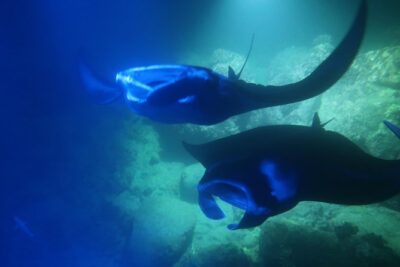
Big Island: Kona Manta Ray Snorkel Tour in Keauhou Harbor
Read our review →Browse the lists this tour appears in