
REVIEW · REYKJAVIK
From Reykjavik: Silfra Snorkeling with Free Photos
Silfra’s great trick is simple: you float through water so clear that the rocks below seem unusually close, while the fissure places you between the American and European continental plates. It is not a tropical swim. The water is about 2°C, your face and hands can feel the cold, and getting into the drysuit takes patience. But the bright blue water and strange rock formations make this one of Iceland’s most unusual half-day outings.
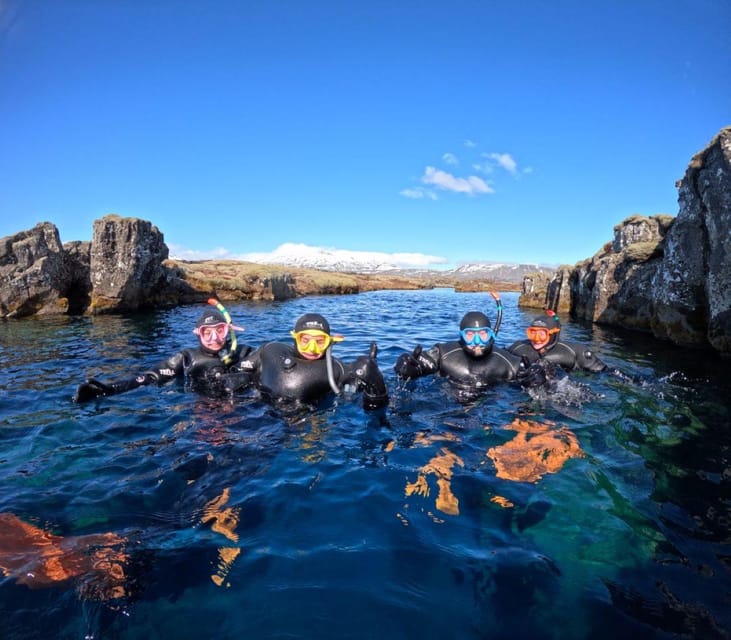
I like the small groups of up to six, which give guides time to help with the suit and keep an eye on everyone in the water. I also like that transport, photos, equipment, and hot chocolate are included, so you can focus on the experience instead of carrying a camera or arranging a rental car. The main drawback is comfort: the suit feels stiff on land, and the cold can catch up with you near the end.
Key points to know
- The water can be clear for more than 100 meters, with brilliant blue tones and excellent views below the surface.
- You snorkel between two continental plates in Thingvellir National Park, a UNESCO World Heritage Site.
- The drysuit is the practical choice for most people, while the wetsuit gives freer movement and more direct contact with the water.
- Guides handle the difficult preparation, including fitting the suit, explaining the route, and helping you enter and leave the water.
- Photos are included, and guides such as Dory, Edgar, Wilmar, and Alex have earned especially warm praise for their calm, friendly care.
- The outing takes 4.5 hours from Reykjavik, with pickup beginning about 90 minutes before the scheduled water session.
Why Silfra feels unlike an ordinary snorkeling trip
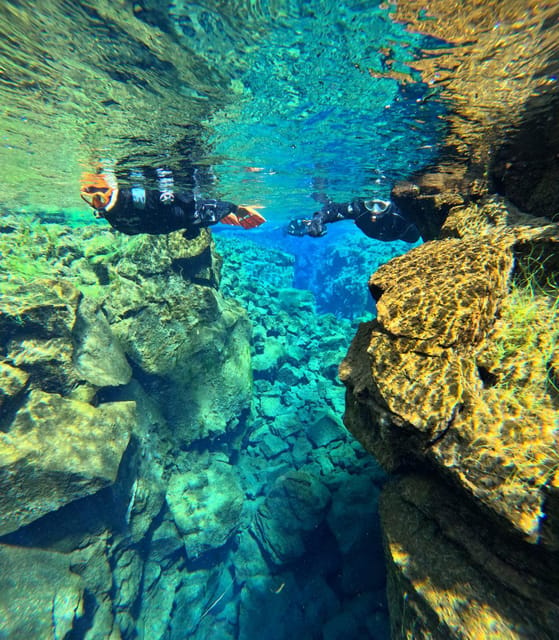
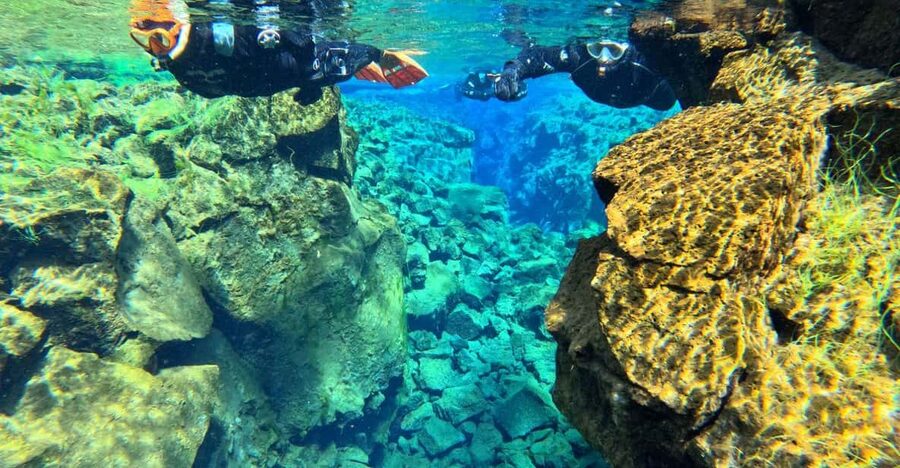
Silfra is not a reef, a beach, or a warm-water holiday. It is a flooded fissure in Thingvellir National Park, where clear groundwater moves through porous lava rock before reaching the site. The result is water with visibility often listed at more than 100 meters, and a blue color that changes with depth, light, and the shape of the rock.
You follow the guide through several sections of the fissure, including a lagoon often called the real blue lagoon. The route is less about seeing fish and more about the rock, the water, and the feeling of floating through a narrow geological divide. You may also hold your breath briefly to move lower in the water, although this is not a certified scuba excursion and no formal diving qualification is needed.
The setting matters. You are inside Thingvellir National Park, not at a purpose-built attraction. The water is cold, the surroundings are rugged, and the experience feels connected to Iceland’s volcanic ground rather than separated from it. That natural quality is a big part of the appeal.
More underwater photo trips in Reykjavik:
- Silfra Snorkeling Between Continents Photos Included- Self Drive
★ 5.0 · 3,427 reviews - Silfra Drysuit Snorkeling with Free Photos – Meet on Location
★ 5.0 · 1,299 reviews - Silfra Drysuit Snorkeling Tour with Free Photos – From Reykjavik
★ 5.0 · 624 reviews
Leaving Reykjavik early for Thingvellir
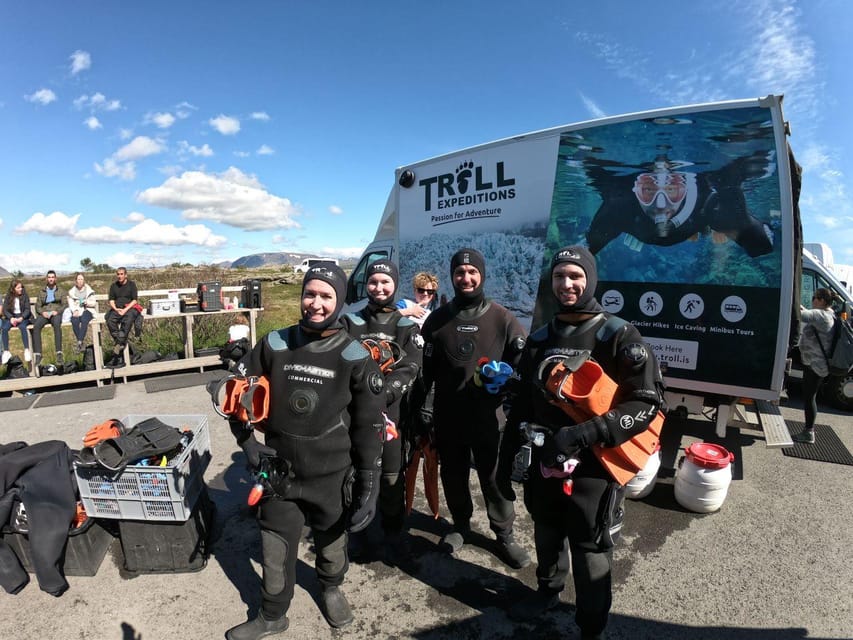
The tour includes pickup in Reykjavik, usually in a minivan marked with the activity provider’s logo. The scheduled time on your booking refers to the start at Silfra, not the time you leave town. In summer, the 9:00 AM session has pickup between 7:30 and 8:00 AM. In winter, pickup begins between 8:00 and 8:30 AM for the 9:30 AM session, or between 11:00 and 11:30 AM for the 12:30 PM session.
That early departure is worth noting when you plan your Iceland days. Eat breakfast before pickup, as the activity requires physical effort and there is no meal included. Warm clothes are also important for the ride and the time before and after the water. You must bring swimwear, socks, and warm clothing. A towel is not included.
The small vehicle keeps the outing personal, though space can feel tight when equipment and winter clothing are involved. Transport has generally been highly rated, but delays can happen. One outing was pushed back by bad weather, and another had a long return wait after a minibus broke down. The provider offered communication and alternatives in the weather delay, but you should avoid booking a tight connection afterward.
The hardest part is getting dressed
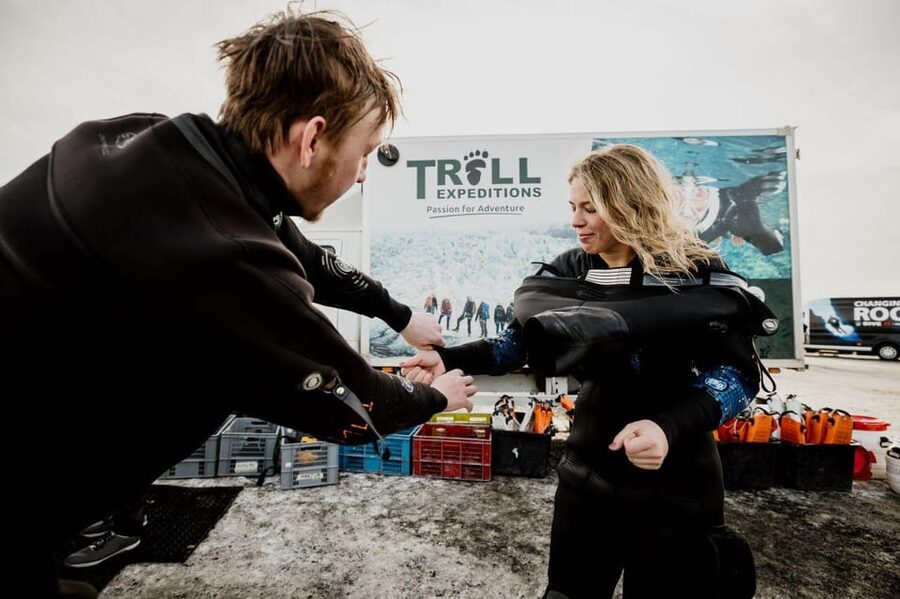
At Silfra, the guide explains the route and checks your medical waiver before helping you prepare. The drysuit fitting takes time. It is snug around the neck and wrists, and you may feel clumsy while walking in it. Several guides, including Dory, Edgar, and Wilmar, have been praised for helping people calmly and making sure the suits fit correctly.
This is where a small group has real value. With no more than six people, the guide can check seals, adjust equipment, and answer questions instead of rushing through a large line. Expect the preparation area to feel cold, especially in winter. Your face and hands are the parts most likely to feel the chill, and removing gloves at the end can be an especially cold moment.
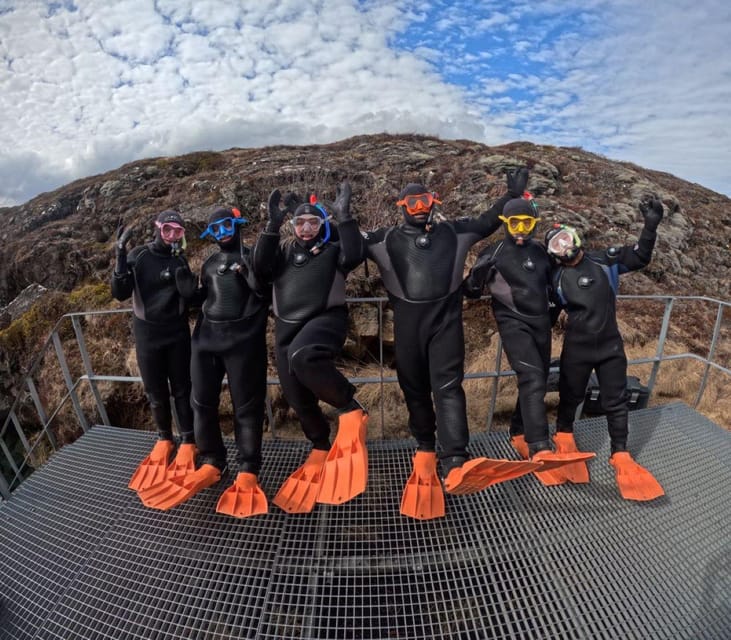
The drysuit lets you keep warm clothes underneath, and the operator supplies the snorkeling equipment and an underlayer. Many people find the suit uncomfortable before entering the water but much easier once floating. A properly fitted suit should keep your body dry, though a small leak is possible. One person reported a leak that did not ruin the outing, while others stayed completely dry.
The wetsuit option is six millimeters thick and gives you more freedom of movement. It also exposes you more directly to the cold water. If warmth is your priority, I would choose the drysuit. If you are comfortable with cold water and want a less buoyant, more natural feel, the wetsuit may suit you better.
Entering the 2°C water
The first minutes in the water can feel intimidating. The guide helps you enter, checks that everyone is comfortable, and then leads the group along the fissure. The drysuit makes you float easily, so you do not need strong swimming technique to stay on the surface. You do need to be able to swim and feel comfortable in water.
Once you begin moving, the cold often feels less dramatic than expected. The water can feel warmer than the air, especially in winter, but that does not mean you will stay completely warm. Your face and hands remain exposed, and the final part of the session may feel chilly. The snorkeling route lasts roughly 45 minutes according to the experience description in the supplied details.
You mostly float with the current and follow the guide. This is not a high-speed activity, and the guide sets the pace. If you are nervous, tell the guide early. Guides such as Anil, Dory, Edgar, and Wilmar have been noted for explaining things clearly, helping beginners, and keeping the mood light without treating safety casually.
The water’s buoyancy and the narrow rock walls create the strange sensation that you are suspended above the bottom. The depth can look dramatic through the clear water, but you are not required to descend. If you want to hold your breath and move lower, you can ask for help with technique. The drysuit makes this harder because it is buoyant, so do not expect effortless underwater movement.
A few more snorkel trips around Reykjavik worth comparing
- Silfra: Snorkeling Between Tectonic Plates – Meet on Location
★ 5.0 · 5,001 reviews - Reykjavík: Silfra Fissure Snorkeling between Two Continents
★ 4.7 · 1,712 reviews - Silfra: Snorkeling Between Tectonic Plates Pick Up from Reykjavik
★ 5.0 · 1,187 reviews - Golden Circle & Snorkeling in Silfra From Reykjavík with Free Photos
★ 5.0 · 571 reviews
The blue sections and the continental divide
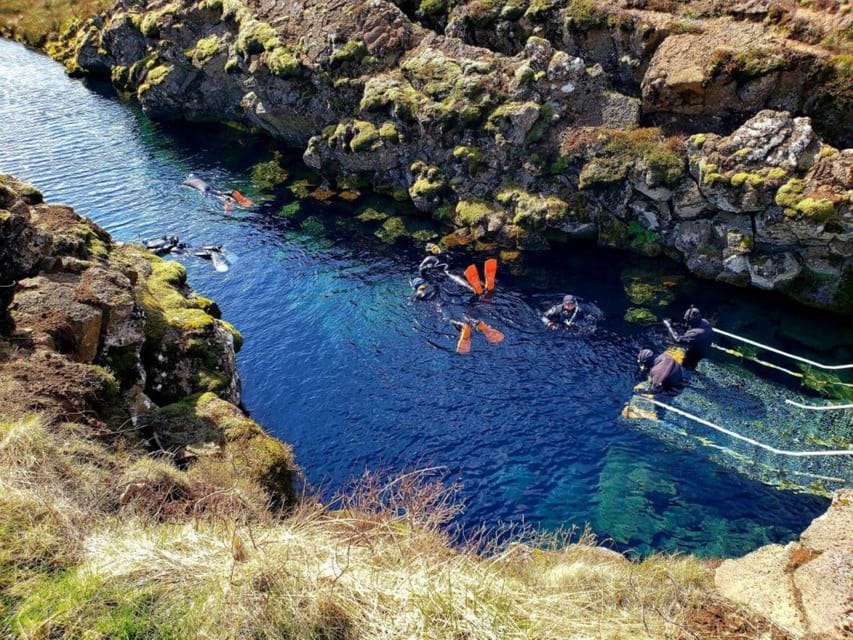
The best reason to book this tour is the view. Silfra’s color is not one flat shade of blue. Light falls across the rock and water differently as you move, and the visibility lets you see long stretches ahead. The rocks below add shape and texture to what could otherwise be an empty water passage.
The continental-plate setting gives the outing its memorable story. You are guided through the gap between the American and European plates, rather than simply swimming in a clear lake. The geology is not presented as a long lecture, but guides explain the site and point out what you are seeing as the group moves along.
The lagoon at the end is often called the real blue lagoon because of its intense color. It is a fitting finish to the route, though you should not confuse it with Iceland’s heated Blue Lagoon. This is natural, cold water, and the reward is scenery rather than a warm soak.
Weather can affect the view. On one January outing, the water was cloudier than usual after poor conditions. That is not the normal expectation, but it shows why the photos and visibility can vary from day to day. Clear weather can also change the light and make the blue tones look different.
Photos let you leave the camera behind
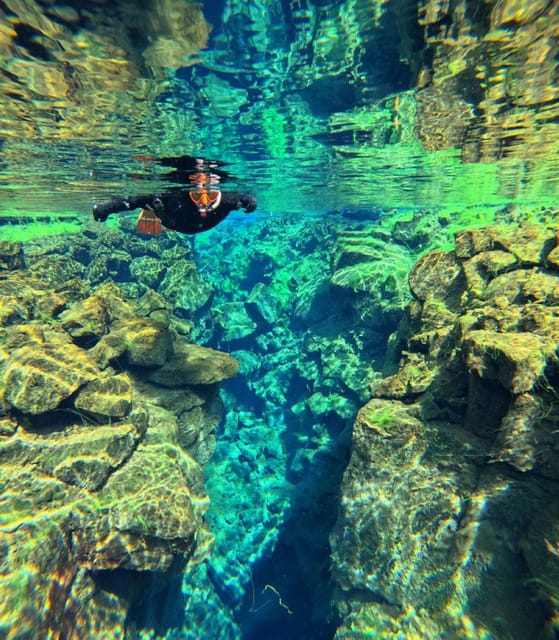
A guide takes photos during the swim, including images of the group and the surrounding rock. The pictures are shared through a download link after the activity, and this is a useful inclusion at a place where handling your own camera can distract from the experience.
You can rent a GoPro for 6,900 ISK if you want your own footage. I would treat that as optional. The included photos are one of the stronger value points, and keeping your hands free makes it easier to follow the guide and enjoy the water.
Photo quality depends on visibility, light, and how much space the group has. Guides have been praised for making sure each person gets attention in front of the camera. If you are traveling alone, the included photos are especially useful because you do not need to ask another person to document the experience.
Hot chocolate and the return to Reykjavik
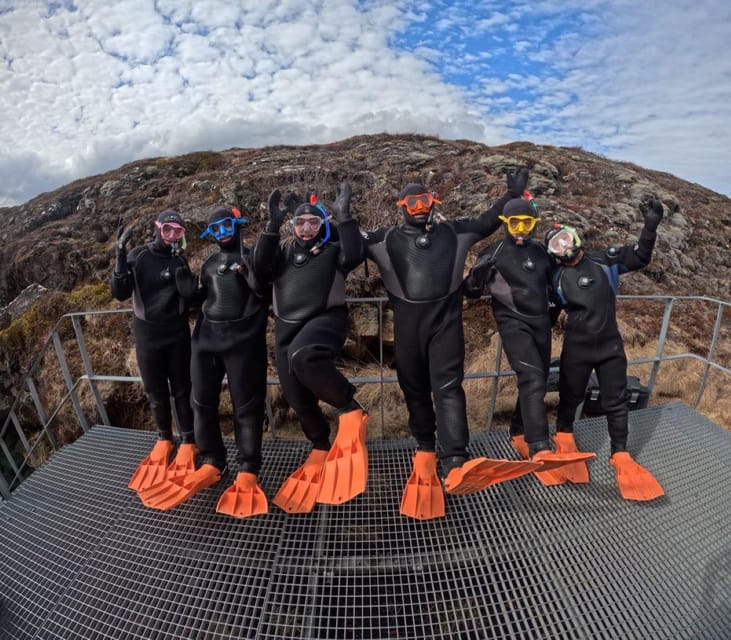
After leaving the water, you change back into warm clothes and receive hot chocolate. This is not just a sweet extra. After standing outside in wet gloves or exposed face gear, a hot drink helps you feel human again. Bring enough warm clothing for the entire process, including a hat, thick layers, and dry socks.
The return ride brings you back to your pickup point in Reykjavik. Allow the full 4.5 hours, and leave extra room in your schedule if the weather changes or transport takes longer than planned. The tour is easy to combine with other Reykjavik plans, but I would not place a fixed appointment immediately afterward.
The guides add much to the day. Alex has been praised for giving a clear briefing and taking plenty of photos. Dory is frequently noted for patience and reassurance during the fitting and swim. Edgar has a calm, professional approach, while Wilmar has been singled out for humor and personal attention. Guide quality can vary by departure, but the consistent pattern is careful help before and during the water session.
Is $220 a fair price?
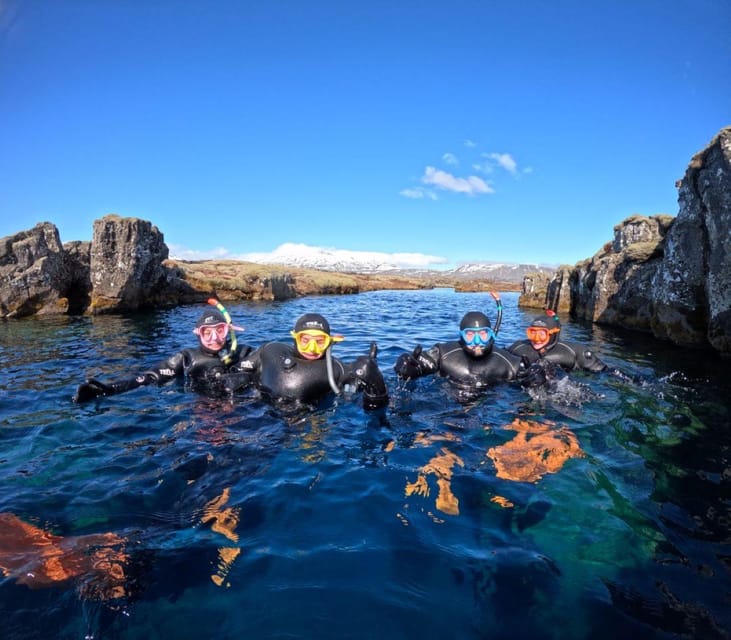
At $220 per person, this is not a cheap way to spend a morning. You are paying for roundtrip transport from Reykjavik, a small group, a guide, all snorkeling equipment, a drysuit or wetsuit, photos, and hot chocolate. Renting a car and arranging equipment independently might look cheaper, but it would not give you the same instruction or support with the suit.
The small group is important to the value. A drysuit activity has more preparation than a quick swim, and individual attention can make the difference between feeling safe and feeling overwhelmed. The included photos also save you from paying for a separate photographer or carrying a camera into cold water.
I would consider the price fair for a once-only Iceland activity, especially if you value unusual natural settings and guided adventure. It is less appealing if you dislike cold water, want a relaxed spa day, or are mainly looking for wildlife. Silfra is about geology, color, and the sensation of floating through clear water.
Who should book this Silfra outing?
This tour suits confident beginners as well as experienced swimmers. You do not need to be a certified diver, but you must swim, communicate in English, and complete the medical waiver. The age minimum is 12, with an adult required, and body-size limits are strict: a minimum weight of 50 kilograms and maximum of 120 kilograms, plus a height range of 150 to 200 centimeters.
The experience is not suitable for pregnant women, people with heart problems, people with mobility impairments, or wheelchair users. You cannot wear ordinary glasses in the mask, so use contact lenses or a prescription diving mask.
I would choose this for someone who wants a memorable natural experience and does not mind physical preparation. It is also a good option for solo visitors because the group is small, the guide helps with the equipment, and photos are included. It is a poor match if cold is a dealbreaker or if getting into a tight suit sounds worse than the water itself.
Should you book it?
Book this Silfra trip if you want to see Iceland from an unusual angle and can accept the cold, stiff suit, and early pickup. The clear water, continental divide, small group, and included photos give the $220 price real value.
Choose the drysuit if you are unsure. Eat first, bring serious warm layers, and do not plan a rushed appointment afterward. If that preparation sounds manageable, Silfra is one of the more distinctive activities you can add to a Reykjavik stay, and the moment you float above the blue rock is likely to stay with you long after the hot chocolate is gone.
FAQ
How long does the Silfra snorkeling activity take?
The experience lasts 4.5 hours in total, including transportation from Reykjavik, preparation, snorkeling, changing, and the return journey.
How clear is the water at Silfra?
Visibility is consistently described as more than 100 meters, or about 300 feet. Weather can occasionally make the water cloudier than usual.
Do I need to be a certified diver?
No. You do not need diving certification, but you must be able to swim and feel comfortable in water.
Is the snorkeling water warm?
No. The water is about 2°C. A drysuit or wetsuit is provided, but your face and hands can still feel cold.
What equipment is included?
The tour includes snorkeling equipment and your selected wetsuit or drysuit. Photos, a guide, roundtrip transportation, and hot chocolate are also included.
Can I choose between a wetsuit and a drysuit?
Yes. You can select a drysuit or a six-millimeter wetsuit option. The drysuit is the better choice if warmth is your main concern, while the wetsuit allows a more direct feel of the water.
What should I bring?
Bring warm clothing, swimwear, socks, and a medical statement if required for your waiver. You should also bring a towel, since one is not included.
What happens if bad weather cancels the activity?
The activity may be canceled because of weather. If that happens, you receive a refund or an alternative date. Free cancellation is also available up to 24 hours in advance.
Just added around Reykjavik
- Reykjavik: Silfra Snorkeling & Lava Tunnel Adventure Combo★ 4.6 · 205 reviews
- From Reykjavík: Silfra Snorkeling with free photos★ 4.7 · 39 reviews
- Reykjavík: Golden Circle and Silfra Snorkeling Combo Tour★ 4.5 · 130 reviews
- Silfra: Leidarendi Lava Caving & Snorkeling Tour with Photos★ 4.8 · 26 reviews
- Silfra: Hot and Cold Snorkeling and Spa Tour – Self Drive★ 5.0 · 248 reviews
- From Reykjavík: Golden Circle Tour and Silfra Snorkeling★ 4.8 · 298 reviews
- Silfra Wetsuit Snorkeling – Meet on Location | Free Photos★ 5.0 · 376 reviews
- Silfra Fissure Snorkeling From Reykjavík – Free Underwater Photos★ 4.5 · 379 reviews
Reykjavik Snorkeling Tours, compared.
Silfra: Snorkeling Between Tectonic Plates – Meet on Location
Read our review →
Silfra Snorkeling Between Continents Photos Included- Self Drive
Read our review →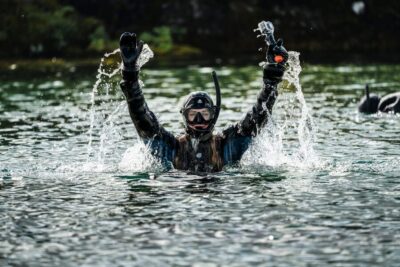
Reykjavík: Silfra Fissure Snorkeling between Two Continents
Read our review →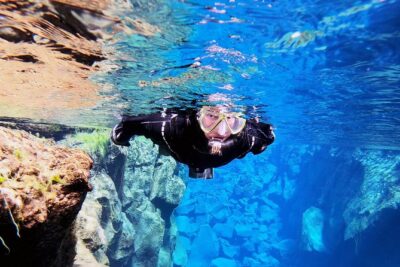
Silfra Drysuit Snorkeling with Free Photos – Meet on Location
Read our review →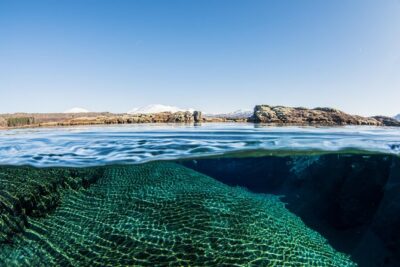
Silfra: Snorkeling Between Tectonic Plates Pick Up from Reykjavik
Read our review →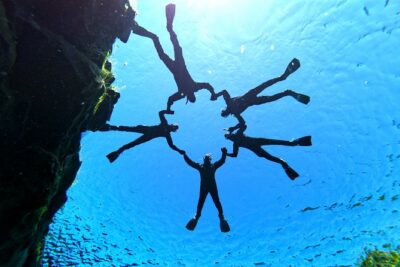
Silfra Drysuit Snorkeling Tour with Free Photos – From Reykjavik
Read our review →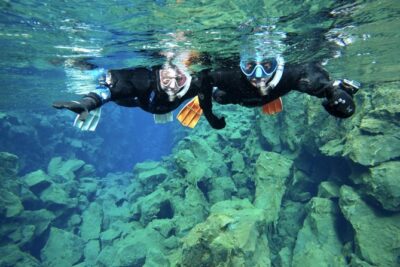
Golden Circle & Snorkeling in Silfra From Reykjavík with Free Photos
Read our review →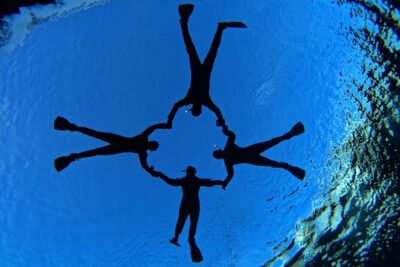
Snorkel the Silfra Fissure-Meet on Location (Free Photos & Cocoa)
Read our review →Browse the lists this tour appears in