
REVIEW · BIG ISLAND OF HAWAII
Manta Ray Snorkel in Kailua-Kona with Hot Cocoa
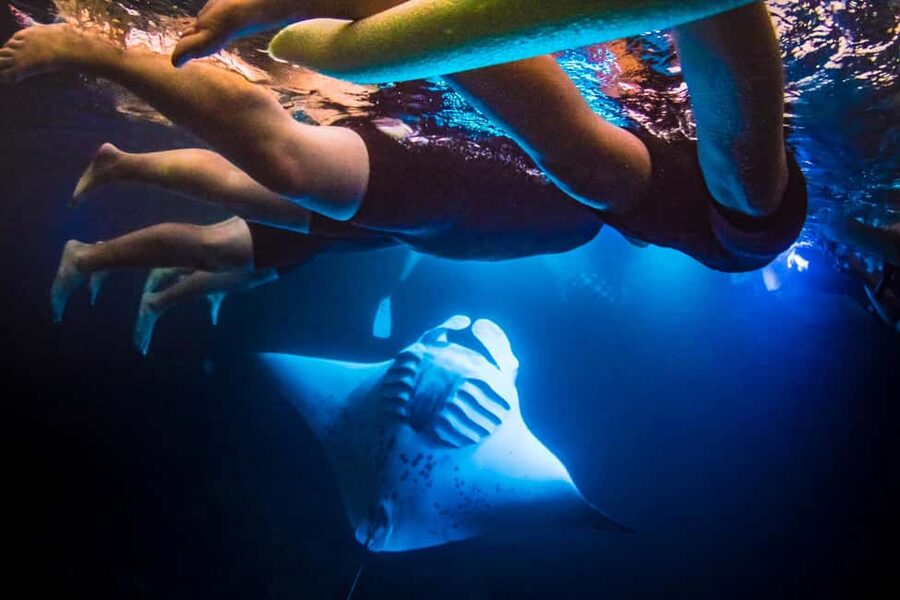
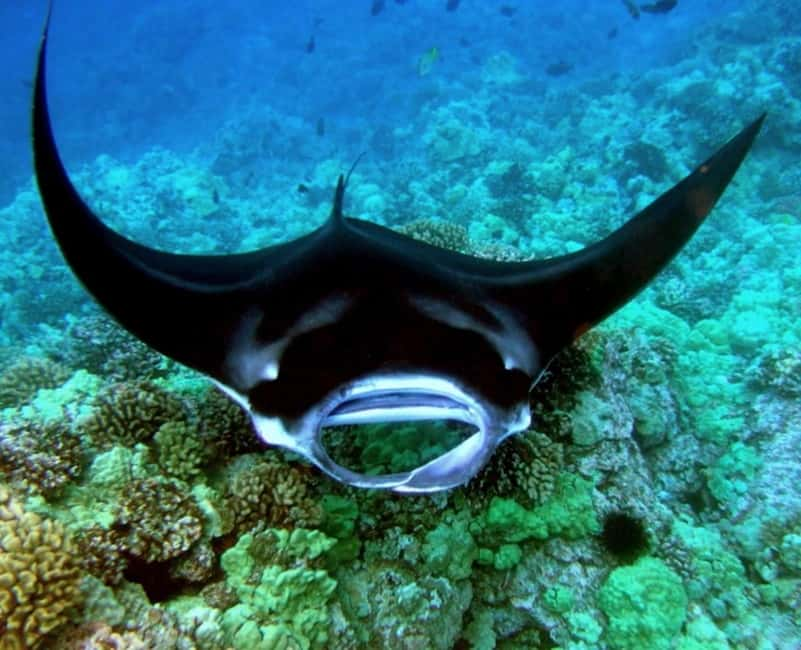
The best part of this Kailua-Kona tour happens after dark, when wild manta rays glide beneath a lighted floating platform and make slow barrel rolls to feed on plankton. You float face down, hold the platform, and watch the action below rather than chase the animals. Mantas can reach wingspans of about 14 feet, yet they are harmless filter feeders.
I like the small-group format and the careful safety work. Guides such as Amy, Mitch, Tamae, Trevor, Diego, and Bryce have been praised for helping nervous swimmers and families get settled. I also like the gentle finish: hot cocoa, tea, snacks, and a moonlit ride back to Honokohau Harbor.
The main consideration is simple: this is still the Pacific Ocean. The water can feel cold, the boat can move around, and motion sickness is possible. A wetsuit costs extra, and manta sightings are not guaranteed, though a return visit is offered if no mantas appear.
Key points to know before you book
- Manta Ray Heaven uses underwater lights: Submerged lights attract plankton, which brings the manta rays close to the viewing platform.
- You spend up to 45 minutes in the water: The snorkeling is designed around floating calmly, not swimming long distances.
- Lifeguard-certified guides stay with you: You receive a safety briefing, gear help, and support in the water.
- KIBOU is a speedboat with bathrooms: The two-hour outing includes the boat ride, snorkel time, and warm refreshments afterward.
- Sunset and moonlight departures feel different: The early trip includes sunset views, while the later departure offers a darker, star-filled setting.
- Wildlife sightings remain uncertain: If no manta rays are seen, Iruka Hawaii offers another available tour at no extra cost.
Watching manta rays from a floating light platform
This is not a typical reef snorkel. The main event takes place at night, with you looking down into the dark water as bright lights pull tiny plankton toward the surface. The manta rays follow the food.
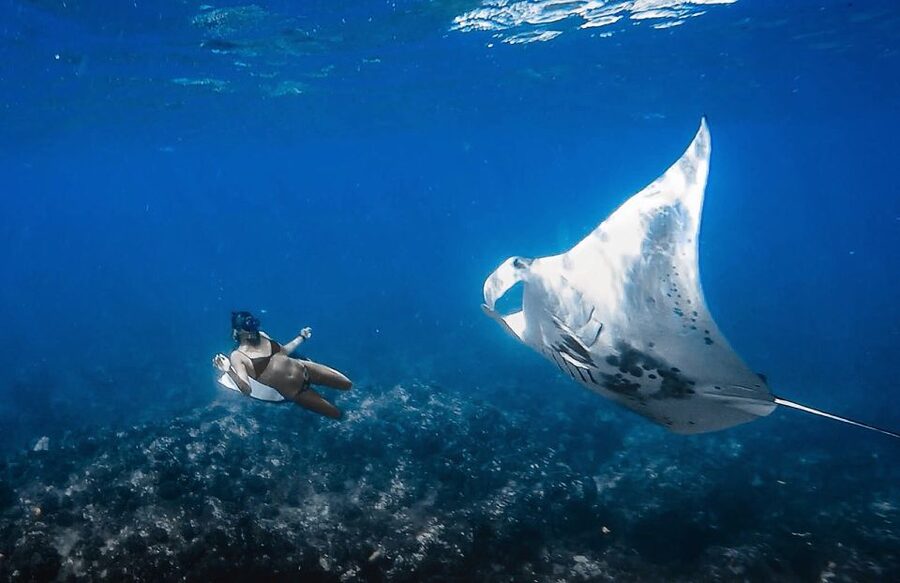
At Manta Ray Heaven, you stay at a floating light platform and watch the animals pass below. Their feeding pattern can look almost choreographed. A manta may sweep in with its mouth open, circle beneath the lights, and roll gracefully before moving away. Some have wingspans of up to 14 feet, so even a brief appearance can feel close and impressive.
The platform matters. You do not need to swim after the mantas or keep yourself moving to find them. Instead, you hold on, keep your face in the water, and let the guides position you for a clear view. This makes the activity a good fit for a first-time snorkeler who can manage open water with support.
The animals are wild, and the crew emphasizes respectful behavior. You are there to watch, not touch or block them. That rule protects the mantas and also gives you a better chance of seeing natural feeding behavior. Keep your arms and legs controlled, listen closely, and avoid making sudden movements.
More whale shark and manta snorkels in Big Island of Hawaii:
- Big Island Manta Ray Night Snorkel
★ 5.0 · 5,656 reviews - Big Island: Kona Manta Ray Snorkel Tour in Keauhou Harbor
★ 4.5 · 2,465 reviews - KONA Manta Ray Night Snorkel – FREE re-ride if no Sightings
★ 5.0 · 2,212 reviews
From Honokohau Harbor to the snorkel site
You meet Iruka Hawaii at Slip A17 in Honokohau Harbor, about five minutes north of Kailua-Kona. Parking is free, which makes the harbor a practical starting point if you have a rental car.
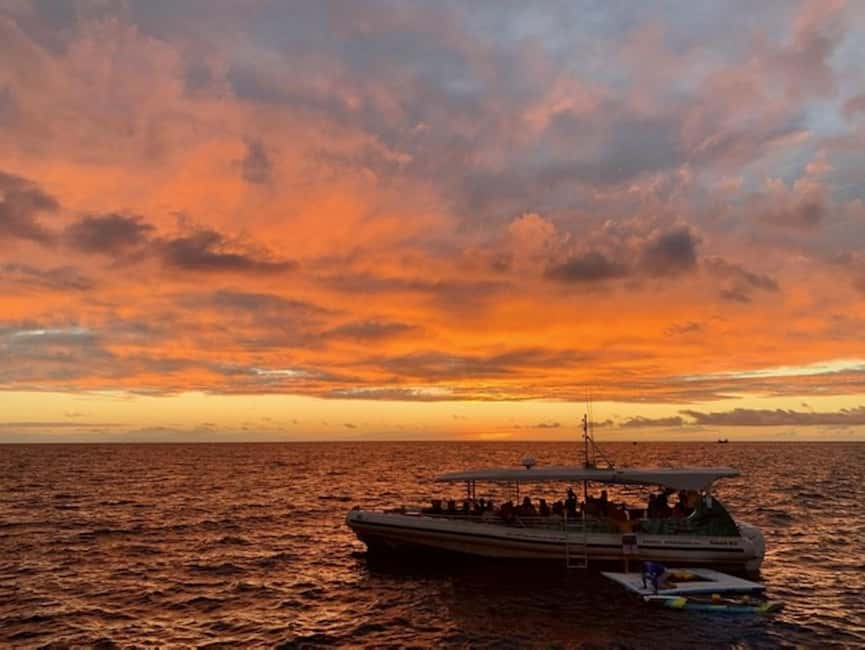
The boat is KIBOU, a speedboat used for the short coastal ride to the snorkel site. The full activity lasts about two hours, but the exact balance between boat travel and water time depends on the departure and conditions. You can expect up to 45 minutes in the water.
The early departure is the sunset option. Choose the later departure for a moonlight outing. Both have their appeal. Sunset gives you changing colors over the coast before the snorkel, while the later trip puts more attention on the lights, dark water, and ride back beneath the night sky.
Before leaving the harbor, you complete a waiver and receive a safety orientation. This is not filler. Pay attention to how the mask fits, how to use the flotation equipment, and how the crew wants you to enter and leave the water. One useful detail from the experience is that a snorkel vest and pool noodle may be available to help you stay comfortable and keep your legs afloat.
The boat has bathrooms, a welcome feature for a two-hour trip. Bring swimwear and a towel. A sweatshirt or warm layer is also sensible for the ride home, especially if you get cold easily.
A calm start for first-time snorkelers
You do not need advanced snorkeling skills. The crew gives you time to become familiar with the mask and snorkel before you enter the water, and the in-water team remains nearby.
If open water makes you anxious, say so early. Guides have helped nervous swimmers understand each step and get their equipment adjusted. You can use flotation support rather than trying to tread water for the entire session.
The experience is easiest for people who can float, follow instructions, and remain in the water with assistance. It is not a vigorous swim, but it is still an ocean activity. Waves, boat movement, and the sensation of looking into dark water may bother some people.
The tour is promoted as family-friendly, and young children have taken part with careful support from the crew. Still, parents should judge each child individually. A three-year-old or six-year-old may enjoy the sight of the mantas, but children need to be comfortable with a mask, water, darkness, and close adult supervision.
The same point applies to older relatives. The guides work hard to keep the activity relaxed, but the water entry and floating platform may not suit anyone with limited mobility. The activity information includes wheelchair accessible language, yet the safety notes say it is not suitable for wheelchair users or people with mobility impairments. Confirm your needs directly with Iruka Hawaii before booking.
What the guides add to the evening
A good manta tour depends on more than finding a productive site. You need a crew that can explain the process clearly, keep the group together, and protect both people and animals.
The crew gives an educational briefing about manta rays and ocean ecology before the snorkel. You learn why the lights are used and how plankton brings the mantas toward the platform. That context helps you understand the scene instead of simply seeing large shapes in the dark.
The in-water guides are lifeguard-certified. Their role includes checking equipment, helping you get comfortable, watching the group, and reminding you how to behave around the animals. Names associated with recent outings include Lena, Amy, Madi, Tamae, Mitch, Trevor, Diego, Bryce, Scott, Brice, and Travis. Staffing can change, so do not book expecting one particular person.
The crew also adds a human touch on the boat. Music, snacks, conversation, and a relaxed tone help settle nerves before entering the water. Several named guides have been singled out for being attentive and supportive, especially with people who were uneasy about open water.
Listen carefully. The crew cannot control the ocean or the wildlife, but it can make the experience safer and more comfortable. The instruction to keep your body position steady is especially important because the manta rays may pass close below you.
A few more snorkel trips around Big Island of Hawaii worth comparing
- Big Island: Captain Cook Snorkel On A Power Catamaran With Lunch
★ 5.0 · 2,232 reviews - Manta Ray Night Snorkel at Kona, Big Island
★ 5.0 · 1,758 reviews - Kona Snorkel Tour: Captain Cook Reef Snorkel, Dolphin & Sea Caves
★ 4.5 · 1,411 reviews - Glow of the Deep: Night Snorkeling with Manta Rays
★ 4.5 · 1,254 reviews
Warm drinks after the night snorkel
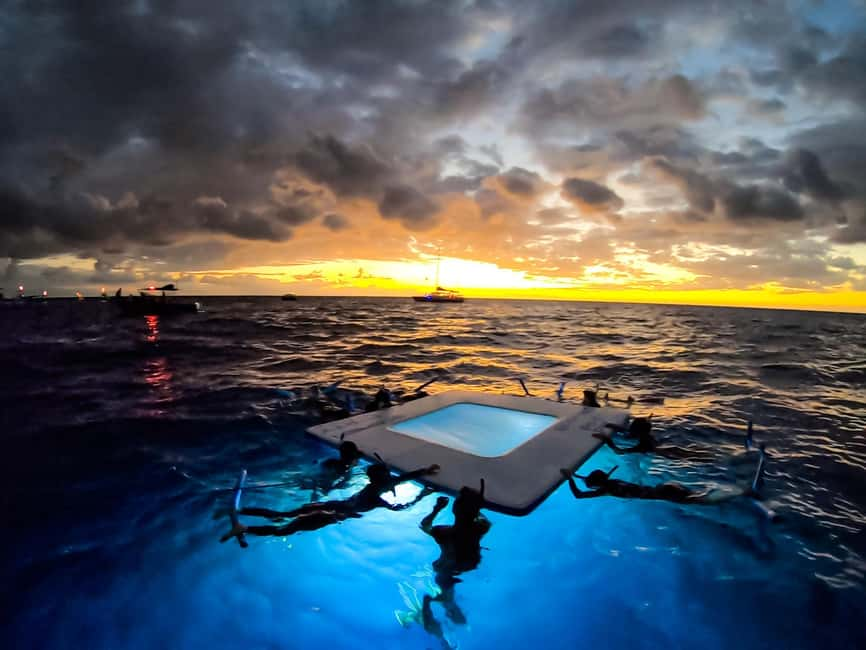
Once you leave the water, you return to KIBOU for hot cocoa, tea, bottled water, and light snacks. This simple part of the tour matters more than it might sound. Night snorkeling can leave you chilled, and the warm drink gives you a chance to settle down before the boat ride back.
The amount of hot cocoa may be limited. If a generous cup of cocoa is a major reason you are choosing this company, keep your expectations modest. You can bring additional food and drinks, but no glass containers are allowed. Alcohol is permitted only after snorkeling.
The boat ride home is part of the experience rather than dead time. You may be tired and wet, but the stars and moonlight can make the return trip memorable. Bring a towel and a sweatshirt so you can enjoy it instead of focusing on the cold.
Some crew members may take photos or videos and share them after the outing, including through AirDrop when possible. Do not count on being able to film your own manta encounter. You usually need one hand for the platform or flotation aid, and your attention is better spent watching the animals.
Cold water, seasickness, and what to bring
The water temperature and nighttime air can make a wetsuit worthwhile. Adult wetsuit rental costs $10, and children’s rental costs $5. If you get cold easily, I would treat this as a practical expense rather than a luxury.
Some people snorkel without one and manage fine, but cold can distract you from the animals. Once you start shivering, the experience becomes about getting warm. A wetsuit can help you stay focused during the full water period.
Motion sickness is the other issue to plan for. The boat ride and the floating stop can feel rough, especially if you are sensitive to ocean movement. The operator recommends taking seasickness medicine about one hour before departure, but medication is not provided.
Pack:
- Swimwear
- Towel
- Warm layer for the boat ride home
- Seasickness medication if you normally need it
- Any extra food or drinks, without glass containers
Alcohol is allowed only after you finish snorkeling. That rule is sensible, since you need to stay alert in the water and follow the safety instructions.
Is $125 a fair price?
At $125 per person, this is not a cheap evening activity. The value comes from the combination of a small-group boat tour, snorkel equipment, lifeguard-certified in-water support, an illuminated manta viewing platform, educational instruction, and post-snorkel refreshments.
You are paying for a specialized wildlife encounter rather than a general boat ride. The lights and location create a focused way to see manta rays that would be difficult to arrange independently at night. The crew also handles the safety process and gear, which is useful if you are new to snorkeling.
Extra costs are limited but worth noting. Wetsuits cost $10 for adults and $5 for children. Transportation to and from the harbor costs extra for the sunset tour, while parking at Honokohau Harbor is free. Gratuity is optional and appreciated if the crew provides strong service.
The price is easier to justify if manta rays are high on your Big Island list. It is harder to justify if you dislike cold water, boat motion, or structured group activities. Since sightings are not guaranteed, the replacement-tour offer gives you some protection, but it cannot guarantee that your second attempt will produce the perfect encounter either.
Who will enjoy this most?
I would recommend this tour to families with children who can follow water instructions, first-time snorkelers, couples seeking a distinctive evening activity, and anyone who wants a close look at manta rays without scuba certification.
It also suits nervous swimmers better than many open-water excursions because the crew provides flotation aids and stays with you. You still need to be willing to enter the Pacific at night, but you are not expected to swim long distances or search for animals on your own.
You may want to choose another activity if you have significant mobility limitations, cannot comfortably enter the water, or strongly dislike motion sickness. The safety notes specifically exclude people with mobility impairments and wheelchair users, despite the separate wheelchair accessible listing detail, so confirm before paying.
This is also not the best choice for someone who wants a quiet, private outing. It is a small-group experience, not a private charter. The group setting helps keep costs down and provides more in-water support, but you will share the platform and boat with other people.
Booking details that matter
The tour is offered in English and runs for about two hours. Select the early departure for sunset, or the later departure for moonlight. If you want transportation for the sunset option, contact the operator about the extra-cost arrangement.
Free cancellation is available up to 24 hours before the tour, and you can reserve now and pay later. That flexibility helps when your Big Island schedule depends on weather and other outdoor plans.
Manta rays are wild animals, so no company can promise a sighting. If none appear, Iruka Hawaii offers a place on the next available tour at no extra cost. Ask about current availability and timing if you need to fit the activity around a flight, dinner, or another reservation.
Should you book the Iruka Hawaii manta snorkel?
Book it if you want a close, unusual wildlife encounter and are comfortable with nighttime ocean conditions. The floating platform, careful guides, and easy snorkeling format make this a strong choice for first-timers and families.
I would choose a wetsuit if you get cold, take seasickness medicine if you are prone to motion sickness, and arrive ready to follow instructions closely. The hot cocoa and snacks are a pleasant finish, but the manta rays are the reason to go.
Skip it if you cannot manage water entry, boat movement, or a group setting. For everyone else, $125 buys a well-organized two-hour outing with a real chance to watch some of the Big Island’s most graceful wild animals from just above the water.
FAQ
Where does the manta ray snorkel meet?
You meet at Iruka Hawaii Dolphin and Manta Tours at Slip A17 in Honokohau Harbor, about five minutes north of Kailua-Kona. Parking is free.
How long is the tour?
The activity lasts about two hours. You can spend up to 45 minutes in the water, with the remaining time used for the boat ride, briefing, preparation, and refreshments.
Is the tour suitable for first-time snorkelers?
Yes. The guides explain how to use the equipment and help you get comfortable before entering the water. Flotation support may also be available.
Are manta ray sightings guaranteed?
No. Manta rays are wild animals, so sightings cannot be guaranteed. If no mantas are seen, Iruka Hawaii offers a spot on the next available tour at no extra cost.
What is included in the price?
The $125 price includes the guided night snorkel, snorkel equipment, lifeguard-certified in-water guides, the floating viewing platform, the safety and ecology briefing, hot cocoa, tea, light snacks, and bottled water.
Do I need to rent a wetsuit?
A wetsuit is optional. Rental costs $10 for adults and $5 for children. If you get cold easily, renting one may make the water portion more comfortable.
What should I bring?
Bring swimwear and a towel. A warm layer is also useful for the boat ride after snorkeling. Do not bring glass objects.
Can I take seasickness medicine before the tour?
Yes. The operator recommends taking seasickness medication about one hour before departure if you are prone to motion sickness. The medication is not provided.
Are sunset and moonlight departures available?
Yes. Choose the early departure for the sunset tour and contact the operator about transportation details if needed. Choose the later departure for the moonlight tour.
Just added around Big Island of Hawaii
- Waikoloa Catamaran Snorkel Sail Including Lunch★ 4.5 · 105 reviews
- Two Tank Morning Reef Dive and Snorkel★ 5.0 · 54 reviews
- 2-Hour Dolphin Watching and Double Reef with Snorkel in Hawaii★ 5.0 · 23 reviews
- Ultimate Ocean Encounters Midday Snorkel★ 4.5 · 43 reviews
- Premium Kona Coast Morning Snorkel★ 5.0 · 179 reviews
- Sunset Cruise & Manta Night Snorkeling Charter★ 5.0 · 16 reviews
- Kona Luxury Catamaran Yacht Snorkel & Sail★ 5.0 · 40 reviews
- Dolphin, Sea Cave & Captain Cook Snorkel Combo in Kealakekua Bay★ 4.5 · 220 reviews
Big Island of Hawaii Snorkeling Tours, compared.
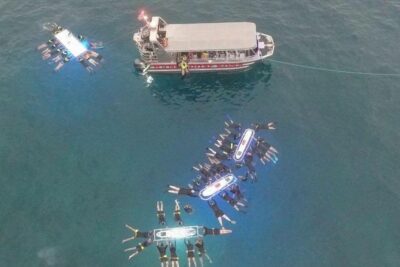
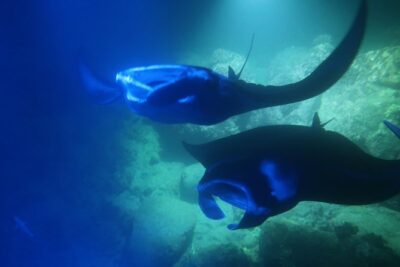
Big Island: Kona Manta Ray Snorkel Tour in Keauhou Harbor
Read our review →
Big Island: Captain Cook Snorkel On A Power Catamaran With Lunch
Read our review →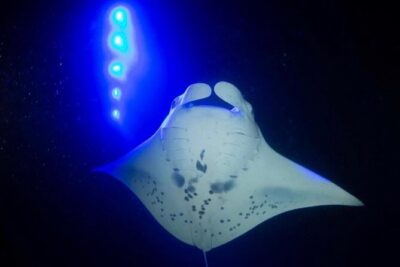
KONA Manta Ray Night Snorkel – FREE re-ride if no Sightings
Read our review →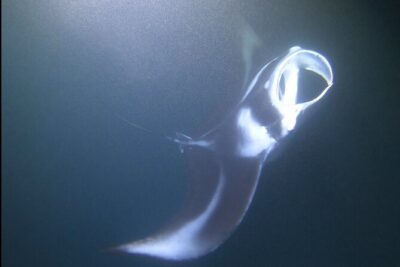
Kona Snorkel Tour: Captain Cook Reef Snorkel, Dolphin & Sea Caves
Read our review →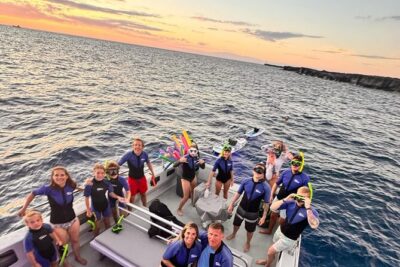
Glow of the Deep: Night Snorkeling with Manta Rays
Read our review →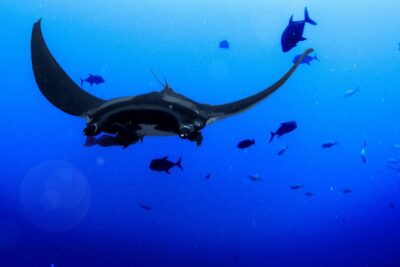
Manta Magic: Small-Group Manta Ray Night Snorkel in Kailua Kona
Read our review →Browse the lists this tour appears in