
REVIEW · SEA CAVE
5-hour Cape Greco Caves kayaking + Snorkelling trip
The best part of this Cape Greco trip is the change of pace: you paddle quietly along Cyprus’s rocky east coast, then trade the kayak for a mask and snorkel among sea caves, white sand, and clear blue water. The star stop is the cove locals call the Palaces, where grand cave entrances frame one of Cape Greco’s finest coastal views.
I like the small private format, because Phivos can adjust the route to your ability, interests, and the sea. I also like that the trip includes both kayaking and snorkeling, rather than making you choose one. The main consideration is water conditions. Choppy seas can change the route, and snorkeling is best for confident swimmers, even though beginners can take part when the water is calm.
Key points at a glance
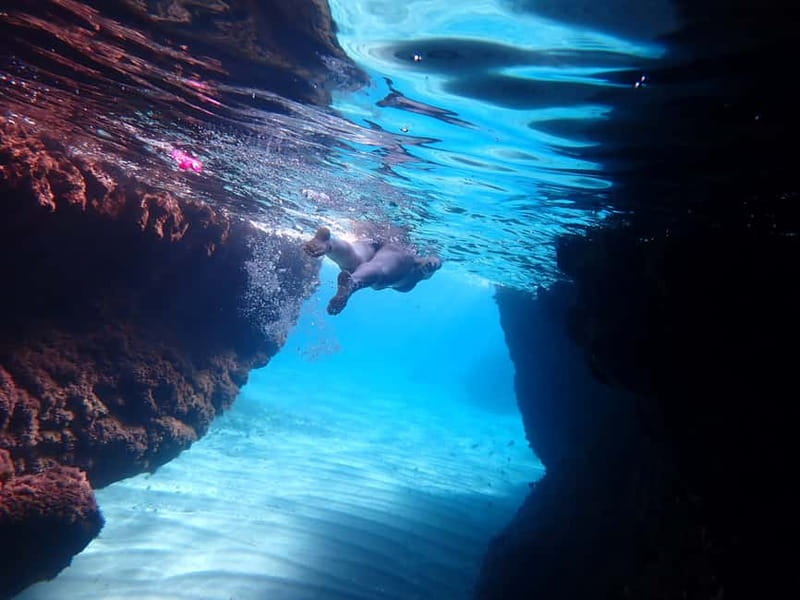
- Paddle from Limnara Beach: Kayak east along rocky coves and bright blue water, with the route adjusted for sea conditions.
- See the Cape Greco Palaces: The sea caves are too shallow for kayaks to enter, but their tall openings make a fine viewpoint.
- Snorkel in two different areas: The usual route includes the Dome and Blue Cave near Ayia Napa, with Konnos Bay or Green Bay as alternatives.
- Swim beneath Lover’s Bridge: A natural rock arch gives the snorkeling section its most memorable moment when conditions are safe.
- Private guidance from Phivos: The pace and route can be tailored to your group, and a large safety buoy helps make the group visible to boats.
- Plan for an active half-day: The trip costs $212 per person, lasts five to six hours, and includes hotel pickup in Larnaca when available.
Kayaking east from Limnara Beach
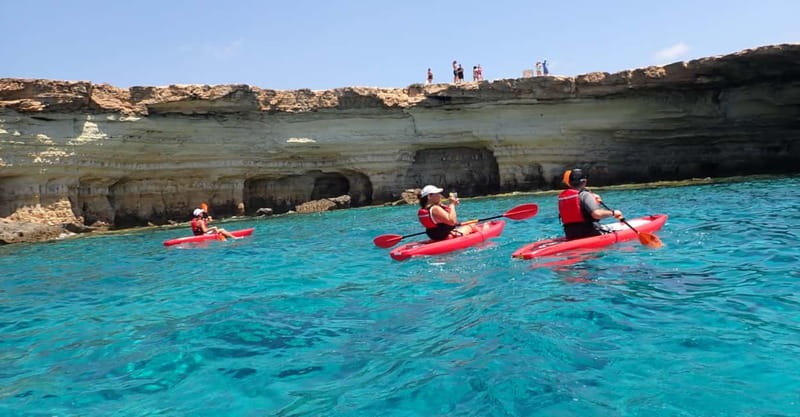
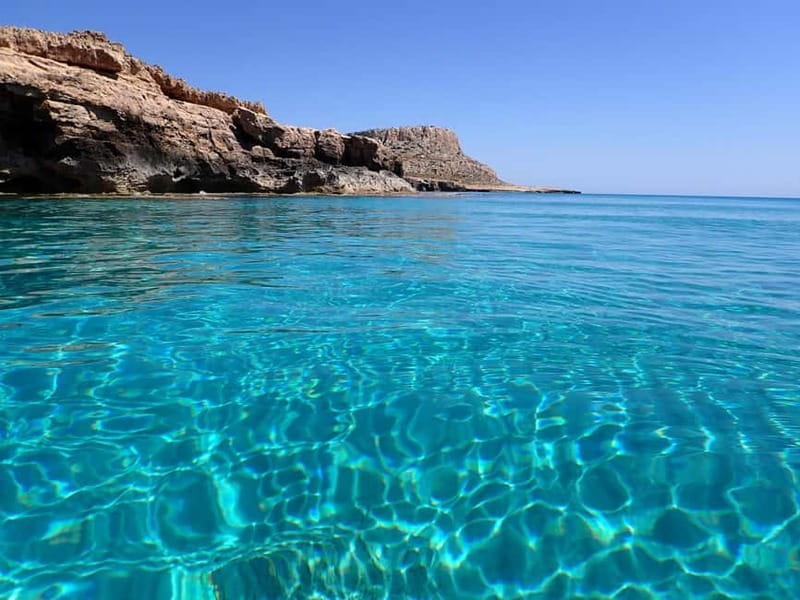
Your day begins at Limnara Beach, the launch point for the kayaking section. From here, you head east along a rocky shoreline shaped by coves, ledges, arches, and pale blue water. The route reaches at least the Cape Greco Sea Caves Cove before returning to Limnara.
This is not a flat-water paddle across a lake. The coast is open to the sea, so the feel of the trip depends on wind and waves. On a calm day, the water can look almost glassy, and you can take in the coast at a gentle pace. If the sea turns choppy, the guide may shorten or change the route.
You use a single kayak, not a tandem. That matters if you like having control of your own boat, but it also means you need reasonable balance and comfort on the water. The stated weight limit is under 100 kilograms, so check this before booking if it may affect you.
Phivos guides from the time you meet him and sets the pace around the group. The trip is not designed as a race. One family found the pace manageable even with very limited snorkeling experience, while another praised the way the guide adjusted the outing to different abilities and endurance levels.
You receive a personal flotation device and a drybag for essential items. Bring only what you need, and keep your phone protected even if it goes in the drybag. The sun reflects off both the water and pale rock, so a long-sleeved swim top and plenty of sun protection are sensible choices. One person reported getting mildly sunburned despite having a great day.
More sea cave snorkels in the world:
- Viator Exclusive: Tulum Ruins, Reef Snorkeling, Cenote and Caves
★ 5.0 · 4,242 reviews - Mallorca: Kayaking, Sea Cave, Cliff Jumping & Snorkel Tour
★ 4.8 · 1,447 reviews - Kona Snorkel Tour: Captain Cook Reef Snorkel, Dolphin & Sea Caves
★ 4.5 · 1,411 reviews
The Cape Greco Sea Caves and the Palaces
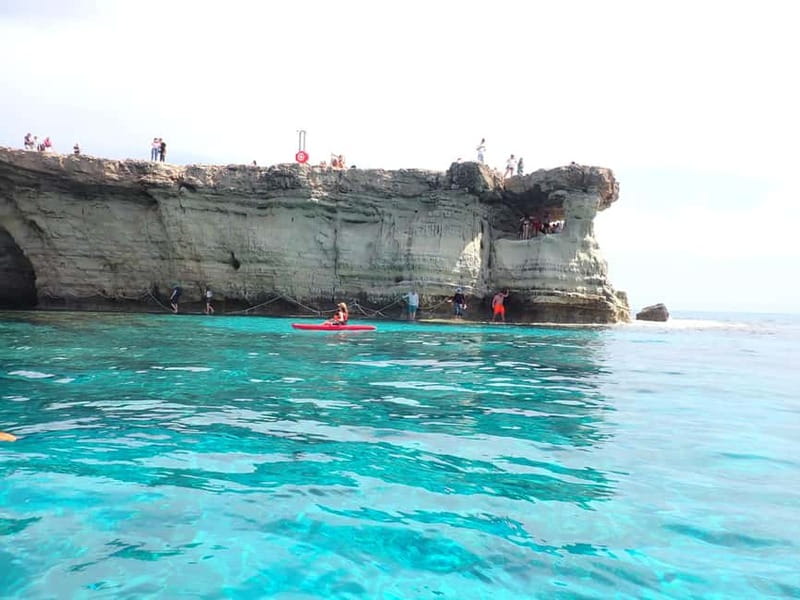
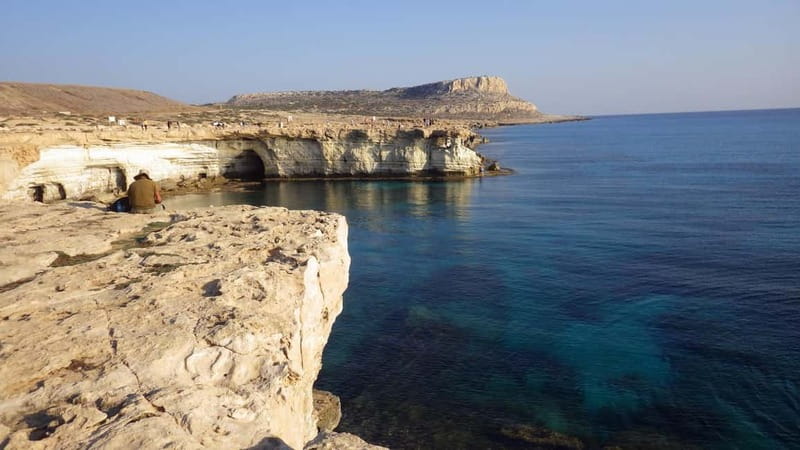
The main kayaking goal is the Cape Greco Sea Caves Cove, known locally as the Palaces. The name makes sense once you see the tall, dramatic cave entrances cut into the rock. You cannot paddle into the caves because the openings are too shallow, but the cove itself is the reward.
From the kayak, you get a broad view of the rock formations and the water gathered beneath them. In summer, this is a popular section of the park, and you may see people jumping from the cliffs into the clear water. Treat that as something to watch, not an invitation to copy. Cliff jumping is not part of the organized activity, and the guide’s route focuses on paddling and safe swim stops.
Depending on weather and your group’s profile, Phivos may continue farther east. The extra distance can bring more rocky coves, unusual formations, and open stretches of clear water. The exact route is not fixed, which is useful here because the sea decides what is sensible.
The ability to adjust the itinerary is one of the strongest reasons to choose this trip over a large scheduled excursion. If you want more time in the kayak, more swimming, or a gentler pace, tell the guide early. The route can be fine-tuned for time, weather, and what your group can comfortably manage.
Snorkeling around Ayia Napa’s caves
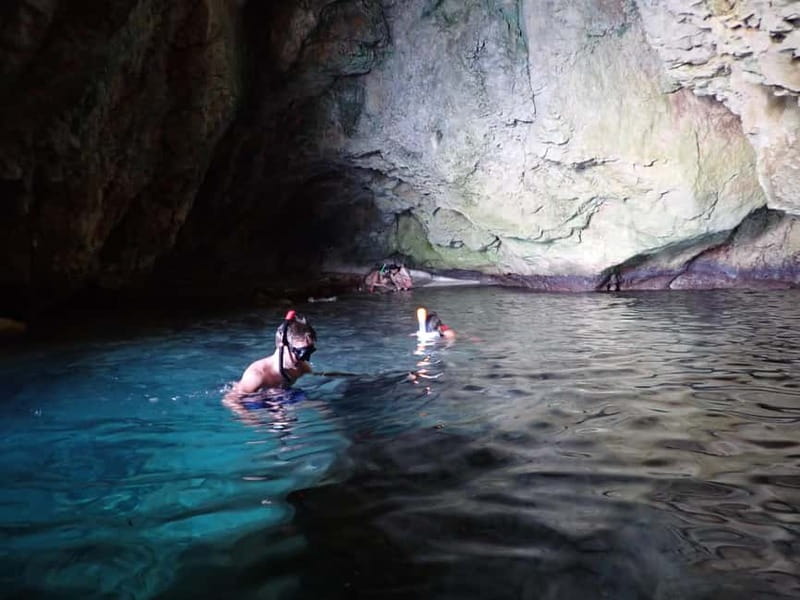
The snorkeling section usually begins at Glyky Nero Beach after the kayaking portion. You enter clear, light blue water above white sand and work toward the Ayia Napa Sea Caves. The snorkeling itself lasts about one hour.
Two usual cave stops are the Dome and Blue Cave. The appeal is not just seeing rock from the surface. You get changing light, shallow underwater spaces, and a closer view of how the cave walls continue below the waterline.
You can borrow a mask and snorkel at no extra charge. Fins are not included, so bring your own if you use them and can confirm they are suitable, but do not count on receiving them from the operator. Water shoes are worth packing because the shore and rocky entries may be uncomfortable for bare feet.
The pace is set by the group. That makes this a reasonable choice for a beginner who can swim and wants time to get used to the equipment. One young participant described starting from the beach, taking time to settle into the gear, and then moving into deeper water without feeling rushed.
Still, do not confuse a relaxed pace with a no-skill activity. You must be comfortable in open water, and the trip is not suitable for non-swimmers. People with heart problems, breathing concerns, back problems, mobility impairments, visual impairments, a cold, pregnancy, or other medical conditions should not book it under the stated restrictions.
The guide carries a large buoy, mainly to alert nearby boats to the group’s position. That is a useful safety measure, but it does not replace your own responsibility in the water. If you are not a strong swimmer, discuss your concerns before entering the sea and be clear about whether you need a flotation aid.
Lover’s Bridge and the natural rock arch
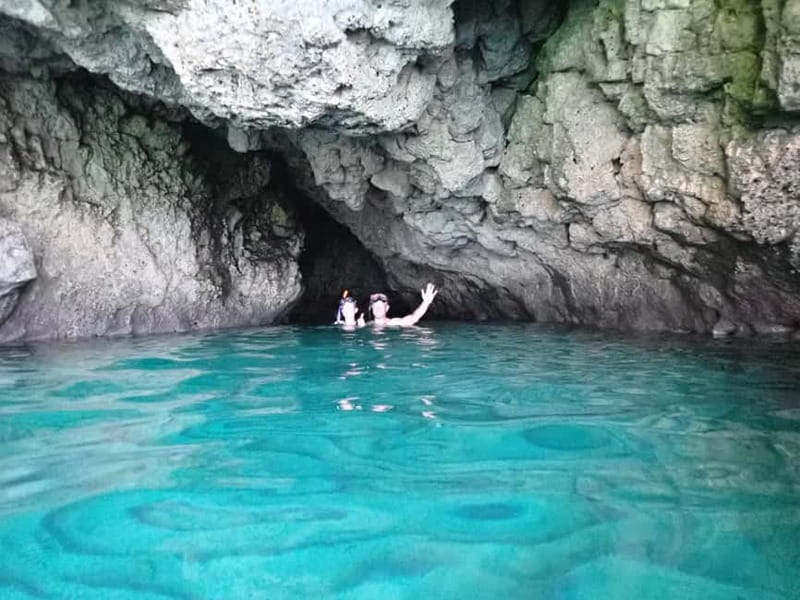
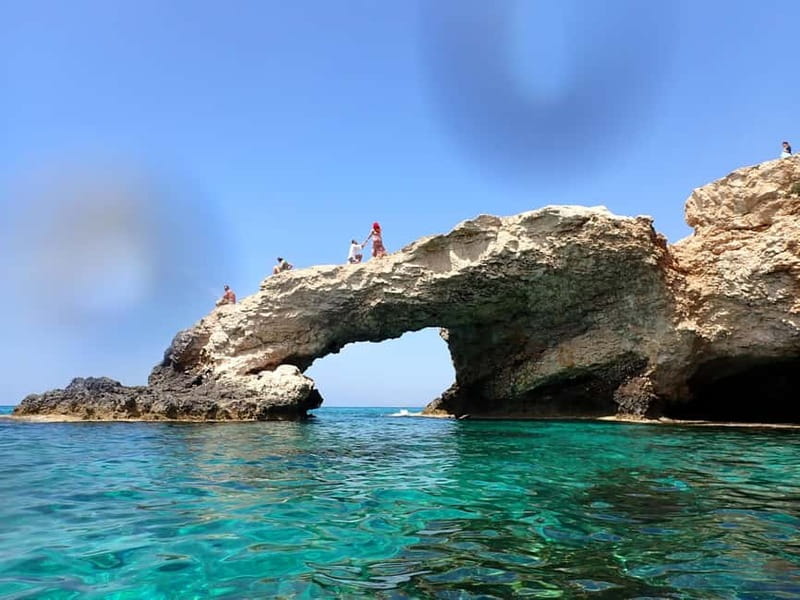
The most distinctive snorkeling feature is Lover’s Bridge, a natural rock arch near the coast. When the sea is calm, you can swim beneath the arch and see the rock from water level rather than only from a viewpoint above.
This is the moment that gives the day its sense of adventure without requiring a technical activity. The arch is a natural formation, not a built attraction, and its appeal comes from the combination of open water, pale rock, and changing blue light.
Conditions matter more here than at a sheltered beach. The guide may choose a different snorkeling area if the south coast is rough after kayaking. Do not see that as a failure of the trip. A safe swim at Konnos Beach or around Nissia near Green Bay is better than forcing a route toward an exposed arch.
More kayak and snorkel trips in the world:
- Tenerife: Kayak and Snorkel with Turtles, Wetsuits Included
★ 4.6 · 7,215 reviews - Barcelona Costa Brava Kayak, Snorkel & Cliff Jump Day Tour
★ 5.0 · 3,872 reviews - Tenerife: Kayak Safari and Snorkel in a Marine Reserve
★ 4.5 · 3,214 reviews - Dubrovnik: Sea Kayaking&Snorkelling Guided Day/Sunset Tours
★ 4.9 · 2,869 reviews
What happens if the sea is rough
The operator has several backup plans. If the water along the main route is choppy, the kayaking and snorkeling may move toward the east coast around Green Bay and Fig Tree Bay. If the snorkeling water is rough after kayaking, the group may use Konnos Beach or Nissia instead.
If you prefer not to take the alternative route, or if conditions are poor on both coasts, the trip can be canceled. Bad weather everywhere also leads to cancellation. This is important in Cyprus, where a sunny day on land does not guarantee calm water.
The itinerary is especially flexible during the warm season, from May 15 through October 31. During colder months, entering the Ayia Napa Sea Caves is forbidden because endangered Mediterranean monk seals may use the area to raise their pups. The restriction protects the animals and changes the snorkeling plan.
If you book during the colder season, you may still snorkel along the kayaking route if conditions allow. If snorkeling is not essential, the operator recommends a shorter three-hour kayaking trip to Cape Greco Sea Caves Cove instead. Ask about the seasonal route before paying if seeing the Ayia Napa caves is your main reason for booking.
A private half-day at $212
At $212 per person, this is not a cheap beach rental. You are paying for a five to six-hour guided outing, single kayaks, safety equipment, drybags, snorkeling gear, swim stops, and a private group rather than a large shared departure.
The value improves if you want both activities in one day and care about a flexible route. A standard kayak hire would not give you the same local direction, cave-to-cave planning, or weather-based alternatives. The included hotel ride can also save time and transport costs.
Pickup is usually available at hotels in Larnaca, with a free ride in the company car when possible. Pickup does not apply from ports or airports, and guiding begins when you meet the guide, so confirm the meeting point and timing before the day.
Food and drinks are not included. Bring water and a simple snack if you need one between kayaking and snorkeling. You should also bring swimwear, a towel, beachwear, and water shoes. Sunscreen and a long-sleeved top are practical additions, even though they are not listed as required equipment.
What makes Phivos a good fit
Phivos receives repeated praise for being friendly, punctual, patient, and well informed about Cape Greco, local plants, animals, and the coast. That combination matters because the trip is not just a boat transfer between photo stops. You spend much of the time beside the guide, learning how to paddle, where to look, and why the route may change.
He can also point out sea creatures during snorkeling. You might see turtles or other marine life, but wildlife sightings are not guaranteed. The best reason to book is the access to caves, coves, and rock formations, with wildlife as a welcome bonus.
The private format helps with communication. Tell Phivos if you want a slower paddle, more time to swim, or a route that puts more weight on caves than distance. One family had a route that included three caves and three beaches, along with two small turtles, showing how much the day can shift around group requests and conditions.
There is one useful safety lesson from the feedback. A participant’s husband had an inhaler and got into trouble after swallowing seawater while snorkeling, which shortened the trip. The person later suggested discussing medical needs in advance and considering flotation support while snorkeling as well as kayaking. Be open with the guide about medication, breathing issues, and your actual comfort in open water.
Who should book this Cape Greco trip?
I would choose this for an active couple, friends, or a parent with a teenager aged 16 or older who wants scenery and water time in one outing. It also suits beginners who can swim and prefer a patient guide rather than a fast, athletic group.
You should book it if you like having a say in the route. The private format is useful when one person in your group is a stronger paddler than another, or when you want to spend more time snorkeling than kayaking.
I would think twice if you want a guaranteed visit to a specific cave. Weather, sea conditions, seasonal wildlife protection, and group ability all affect the route. I would also skip it if you do not swim, dislike open water, or have a medical condition covered by the restrictions.
The five to six-hour length is well judged for most active visitors. It gives you enough time to paddle, stop, snorkel, and return without turning the day into an endurance test. You still need to be ready for sun, salt water, and several hours of activity.
Should you book it?
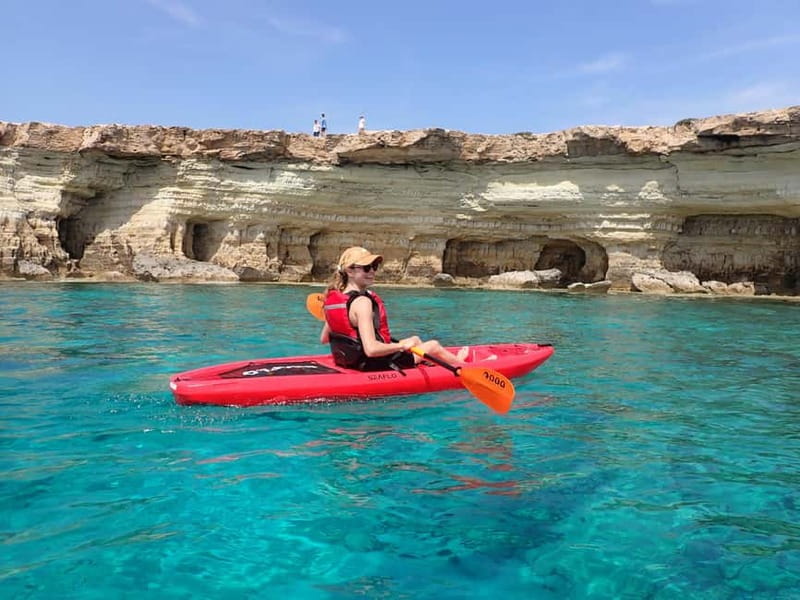
Book this trip if you want Cape Greco from the water and value personal guidance over a fixed schedule. The strongest features are the private route, the mix of kayaking and snorkeling, the Palaces sea-cave cove, and the chance to swim under Lover’s Bridge.
Before booking, confirm the season, pickup details, weight limit, and likely snorkeling location. Bring water, sun protection, a towel, and water shoes. If your health or swimming ability is not straightforward, explain it before the trip and ask what flotation support is available.
At $212 per person, the price makes the most sense for people who will use the full half-day and appreciate a guide who can adapt the plan. If you want a simple kayak rental or a guaranteed calm-water swim, choose something less exposed. If you want a thoughtful, flexible day along one of Cyprus’s most striking coasts, this is a strong choice.
FAQ
How long does the kayaking and snorkeling trip last?
The trip lasts approximately five to six hours. The snorkeling portion usually takes about one hour, with the rest of the time covering pickup when arranged, preparation, kayaking, swim stops, and the return to Limnara Beach.
Where does the kayaking begin?
The kayaking section begins at Limnara Beach. You paddle east along the rocky coast toward Cape Greco Sea Caves Cove and then return to Limnara Beach.
Can I enter the Cape Greco sea caves by kayak?
No. The cave entrances at the main cove are too shallow for kayaks. You can view the formations from the water and explore suitable caves during the snorkeling section when conditions allow.
What happens if the sea is choppy?
The route may change to calmer water around Green Bay and Fig Tree Bay, or snorkeling may take place at Konnos Beach or around Nissia near Green Bay. If conditions are poor everywhere, the trip may be canceled.
Is snorkeling available during the colder season?
You may snorkel along the kayaking route during the colder season if conditions allow. Entry into the Ayia Napa Sea Caves is forbidden during this period because endangered Mediterranean monk seals may use the area to raise their pups.
Is snorkeling equipment included?
A mask and snorkel are available at no extra charge. Fins are not included. You should bring swimwear, a towel, water, beachwear, and water shoes.
Is hotel pickup available?
A free hotel ride may be available in Larnaca, usually from a hotel and not from a port or airport. Guiding begins when you meet the guide, so confirm the meeting arrangements before the trip.
Just added around the world
- Blue Grotto and Capri Boat Tour with Aperitivo Swim and Snorkel★ 4.5 · 47 reviews
- Cancun Whale Shark Experience with Snorkel & Transportation★ 4.5 · 23 reviews
- Land & Sea Adventure to Soufriere/Snorkelling/Mudbath/Lunch★ 5.0 · 106 reviews
- Xelha Snorkel Adventure! Gorgeous & Natural From Playa Del Carmen★ 4.5 · 10 reviews
- Lérins Islands sailing discovery, snorkeling and paddle SUP★ 4.5 · 10 reviews
- Tulum Akumal Snorkel Tour and 4 Cenotes Small Group All Fees Incl★ 5.0 · 28 reviews
- Snorkel, Breakfast, Buffet, Drinks, Xel-ha All Included!★ 4.5 · 17 reviews
- Jungle Tour Adventure in Cancun with Snorkeling★ 3.0 · 10 reviews
Sea Cave Snorkeling Tours, compared.
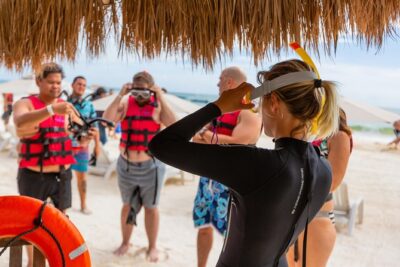
Viator Exclusive: Tulum Ruins, Reef Snorkeling, Cenote and Caves
Read our review →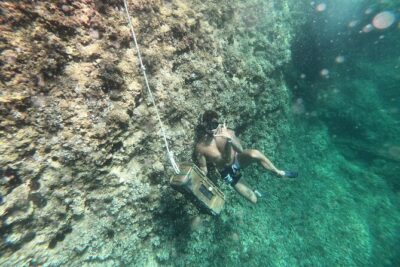
Mallorca: Kayaking, Sea Cave, Cliff Jumping & Snorkel Tour
Read our review →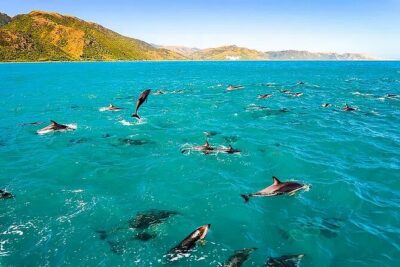
Kona Snorkel Tour: Captain Cook Reef Snorkel, Dolphin & Sea Caves
Read our review →
Ibiza: Snorkeling and SUP Paddle, Beach and Cave Tour
Read our review →
Costa Brava: Sea Caves Kayaking and Snorkeling Tour
Read our review →
Pula: Cave Kayak Tour, Snorkeling and Island Jumping
Read our review →
Vlore: Haxhi Ali Cave, Karaburun Speedboat Tour & Snorkeling
Read our review →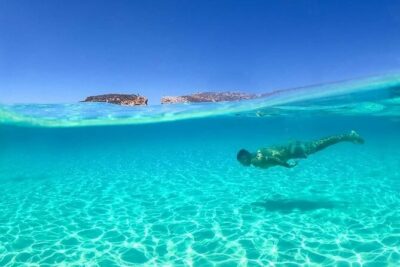
Malta: Comino, Blue Lagoon & Caves – swim, snorkel & slide
Read our review →Browse the lists this tour appears in